Posted on 5th March 2026 by Penny Gibbs
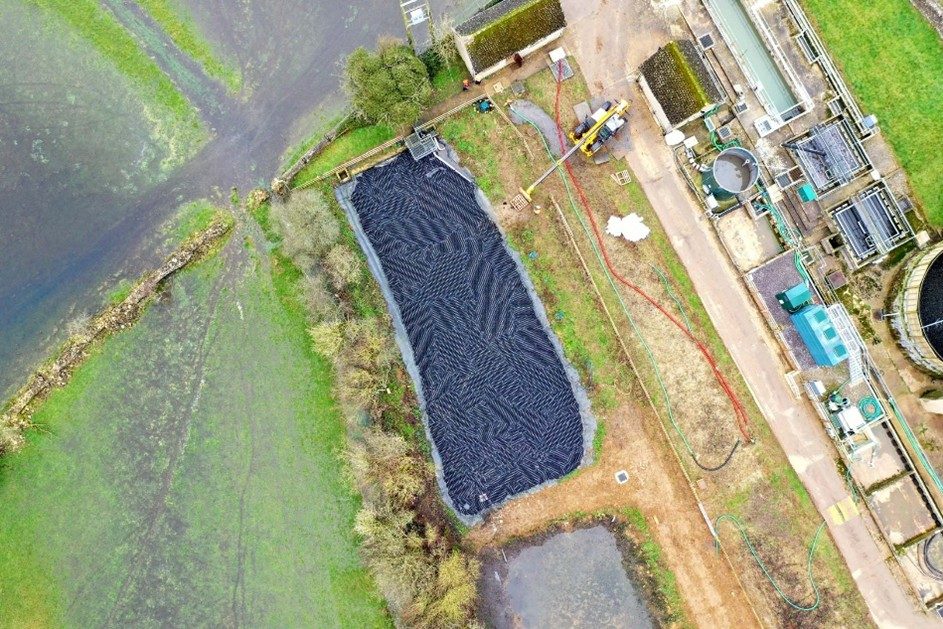
Across the UK, reservoir and open water storage management is under increasing pressure. Climate change is shifting rainfall patterns, dry spells are lasting longer, and demand continues to rise. Even with essential work like infrastructure upgrades and leak detection, two stubborn challenges remain right at the surface of open water storage: evaporation loss and algae growth.
For reservoir operators, this is where shade balls offer a practical, low-maintenance option. They support evaporation control by reducing exposed surface area, and they support algal reduction by limiting sunlight reaching the water.
Reservoir evaporation in the UK is not a small issue. Typical losses are estimated at 400 to 600 mm per year, equating to around 275 million cubic metres annually across UK reservoirs. That level of loss could supply around five million people each year.
And the pressure is set to grow. Climate models suggest evaporation could increase by 12 to 25% by the 2040s, with the most significant rises expected in spring and winter, particularly in Southern and Eastern England, where water stress is already a serious concern.
Evaporation control is no longer just a “hot weather” problem. It is becoming part of long-term water resilience planning.
Shade balls are 100 mm hollow spheres, typically made from UV-stabilised High-Density Polyethylene (HDPE), designed to float on open water bodies.
They are half-filled with water, which keeps them stable and helps them sit around 50% below the waterline in all weather conditions.
When deployed across a reservoir or open storage area, they form a floating cover that can deliver up to 91% surface coverage.
The result is a passive surface layer that works with the water level rather than fighting it. Shade balls are maintenance-free and self-adjust with changing water levels.
The principle is straightforward. The more you reduce direct exposure of the water surface to sun and wind, the more you reduce evaporation.
With high surface coverage, shade balls can help reduce evaporation by up to 90%, making them a strong option for reservoirs and open storage where you need water savings without powered systems or permanent structures.
Unlike impermeable covers, shade balls are compatible with natural aeration and aquatic ecosystems, and they do not require construction works or electrical infrastructure.
A further benefit is that the reservoir can continue to function as a natural habitat, supporting fish, newts and natural plant life. Where recreation is permitted, the reservoir can still be used for activities such as boating or swimming. If the surface is disturbed by an activity, the balls can move aside and then reform across the surface afterwards.
Algae thrives on sunlight. In open reservoirs and lagoons, sunlight-driven algal blooms can degrade water quality and increase treatment costs.
Shade balls block sunlight and disrupt photosynthesis, which helps inhibit algae growth at source.
This matters because traditional responses to algae often rely on chemical dosing or other interventions that can be costly, recurring, and operationally disruptive. Shade balls offer a low-maintenance, chemical-free route to algal reduction by reducing light penetration across the surface.
Water storage sites need solutions that are predictable, durable, and easy to manage:
Euro-Matic developed shade balls in 1965 to deter bird activity around open water and have since been refined for evaporation and algae control.
You can use shade balls for:
If you want to go deeper, our white paper includes real-world case studies and outcomes.
If you manage a reservoir or open storage site and want to explore shade balls for evaporation control and algal reduction, Euro-Matic can help you understand what a deployment could look like for your surface area and operating conditions. Contact us to find out more.